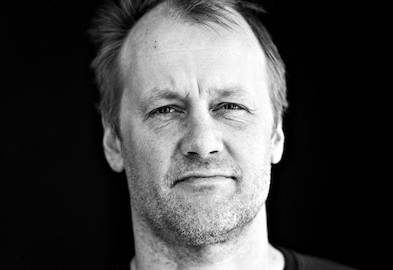
Interview – Randy Thom
At the age of 20 Randy Thom wandered into a radio station and started volunteering. After working on the creative side in radio for about five years he began to try to get into film sound. Thom started his career with a spontaneous walk-in on the stereo mix session of American Graffiti. He introduced himself to Walter Murch, Ben Burtt, and Mark Berger.
He simply stated, “Hi, I’m Randy. I’ve been working for a radio station in Berkeley, and I want to work in film sound. It was at this point that Murch gave Thom a chance to sit in on a few mix sessions. He would go on to work his first sound job as an assistant for Apocalypse Now. His second sound job would prove to be a strong turn in his career, as he assisted Ben Burtt in the Sound Effects Recording for The Empire Strikes Back.

Randy Thom (1951, Shreveport, Louisiana, USA)
Director of Sound Design at Skywalker Sound
A great essay by Randy: Designing a Movie for Sound
When in the film production process do you normally receive a script and what are the first steps you take?
I do usually receive a script for live action films, not for animated films. I read the script and compose a list of questions for the director. At first the questions are mainly to help me, and the director, figure out what the sound style of the film should be.
Can you describe your preferred workflow for the sound creation of an animated feature film?
I like to start early, before any animation has begun, when there are only stick figures. I make and gather sounds that I think will help inspire the animators.
When do you have creative discussions with the director of a film? Do you have some examples of things you talk about?
I have creative discussions throughout the process, usually at least once a week. On “The Incredibles” Brad Bird and I spent quite a bit of time talking about the sound style. The James Bond films were a big inspiration for him, so we talked about ways to get a similar feel from the sounds we would create for “The Incredibles.”
“You are an artist, not a technician”
How often is a director usually around from soundedit to mix on the larger films you work on?
It varies greatly. Some directors are rarely present, and some are present almost all the time.
When do you have creative discussions with the producers of a film?
Producers sometimes join meetings I’m having with the directors. Some producers express creative ideas, and some don’t.
How do you feel about using commercial soundeffects libraries?
I have no problem with using commercial libraries, but I wouldn’t want to use the same sound effects over and over again. I think of commercial libraries as raw material that I can re-work into new sounds.
When do you feel the need to freshly record (non foley) soundeffects?
We try to make new recordings for every film. I find that anything I record I will eventually use, though sometimes not on the project it was recorded for.
How do you give direction to your team as a supervising sound editor? Which tasks do you delegate?
I usually choose the sounds I will concentrate on, and ask the other designers and editors to focus on other sounds. We have a “spotting session” with all of the sound crew present where we discuss who will do what.
Do you stay in touch and exchange your work with composers occasionally? Or do sound design and score not come together before the mix?
Composers and sound designers almost always start with good intentions about collaborating, but often we are all so busy trying to do our own thing that it makes collaboration very difficult. Even when it’s difficult it should be done. When it doesn’t get done it makes the final mix a nightmare.
What’s the worst memory of killing your darlings, after getting feedback from your clients?
The sound that Bob Zemeckis chose for the signal Jodie Foster hears in “Contact” was not my favorite of the ones I had come up with. Lots of people love it though, so I guess he made a good choice!
What inspires you in your work as a sound designer?
Anything and everything. The more broadly educated you are the better artist you are, because art is largely about borrowing ideas from other people and doing your own thing with them. The more you know those ideas the better borrower you are.
If you can only pick one, what would pick: Sound Design of Mixing? And Why?
Sound design. Mixing has always been very frustrating to me, though I think I’m good at it. It is far, far more “political” than sound design, involves more interpersonal skills. Those skills are far more important to a re-recording mixer than the skills related to operating the equipment, even more important than aesthetic skills.
“Art is largely about borrowing ideas and doing your own thing with them”
Do you have a signature as a sound designer, something that makes your work recognizable?
I don’t think I do, and I like it that I don’t. I consider myself to be versatile. I like working in all genres, and love going from a film like “The Peanuts Movie” to “The Revenant,” which I did.
Are you at the point in your career where you feel confident in your artistic decisions? Or can the creative process still make you nervous?
I still get nervous, but the confidence seems to always kick in at some point. I know that I have worked my way out of many, many difficult artistic and political situations in my career, so I know I have a good chance of being able to do it again.
How do you select your soundcrew?
Each supervisor at Skywalker has certain people who they usually work with, but it’s also common for somebody who often works with me to work with Ren Klyce or Gary Rydstrom on a project, or visa versa.
At what Dolby level do you mix large feature films?
7
What are your thoughts on the loudness war?
It’s mostly about bad writing and bad directing. Loud is absolutely appropriate for many films, but not loud for thirty minutes with no rest. That’s just dumb, and it comes from fear and lack of imagination in some directors.
“We desperately need more diversity”
What three films should every sound designer watch for sound design inspiration?
I could come up with many groups of three. How about “Apocalypse Now,” “The Conversation,” and “Wall-E.”
What are you thoughts on diversity and inclusion within the sound industry?
We desperately need more of it. It’s criminal that the industry has been almost exclusively white men for 80 years. Those of us who have the power to hire should be going to extraordinary means to find and recruit people from groups that are under-represented in our business. The movies will get better if we do. The “most highly qualified” person for the job is not always the person you should hire. I was far from the most qualified person Walter Murch could have hired to be his assistant on “Apocalypse Now.” But he saw something in me that made him think I might make a contribution someday. I flatter myself to think he was right. Hiring the most qualified person in the current environment will almost always mean hiring a white man. Look beyond qualifications. Look for smart, fun people with imaginations, and look in places where everybody else isn’t looking.
Knowing what you know now, what two pieces of advice would you give yourself when you started out in Sound Design?
Don’t become obsessed with technology. You are an artist, not a technician.